
Why Do I Have Cellulite Even Though I Work Out, and What Actually Helps?
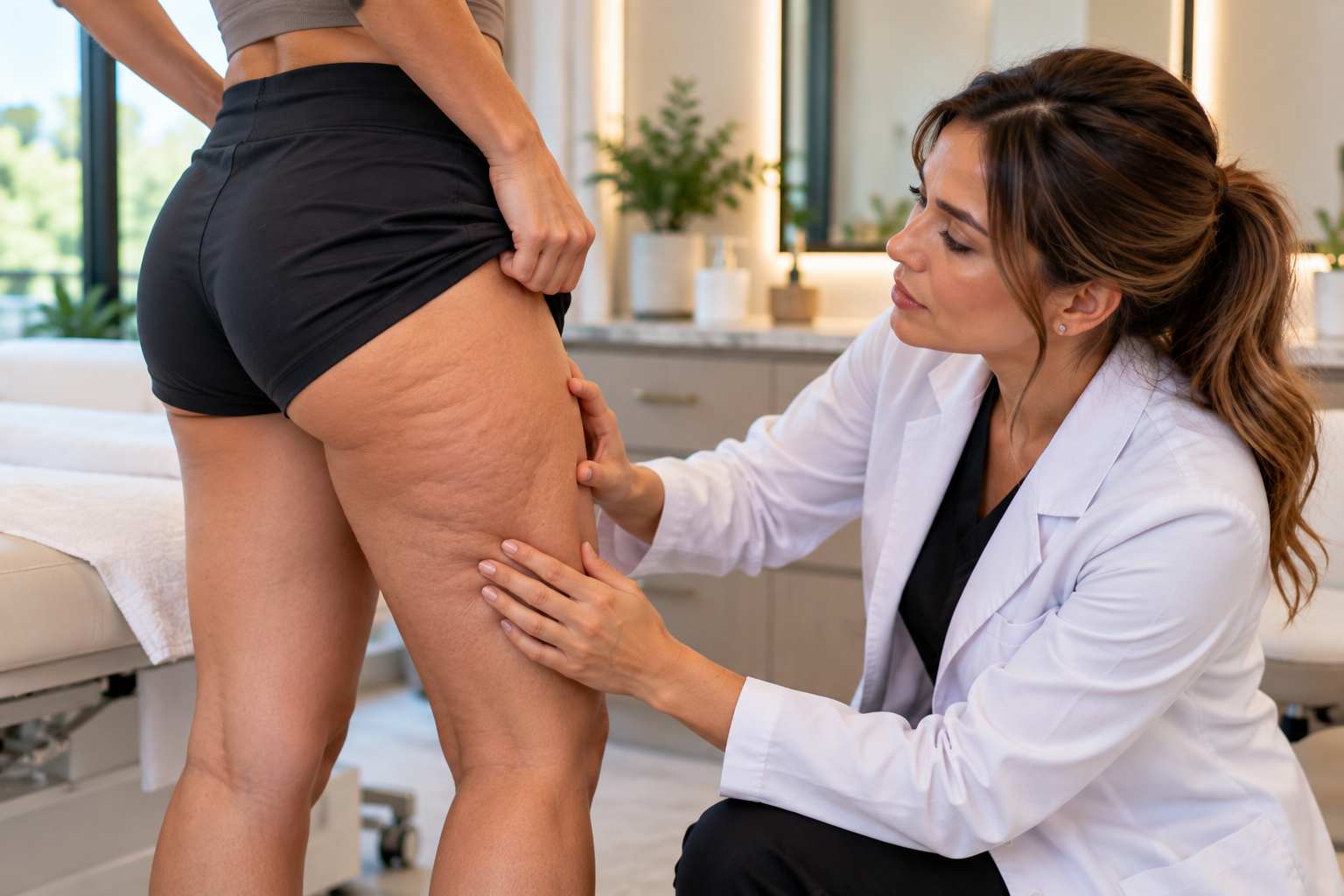
Cellulite is extremely common, and having it does not mean you are out of shape. It forms where fibrous bands connecting your skin to deeper tissue pull down while fat pushes up, creating a dimpled surface. Genetics and hormones play a large role, which is why even lean, active people get it. Non-surgical body contouring treatments that reduce stubborn fat and firm loose skin may soften how cellulite looks, but results vary, improvement is usually gradual, and maintenance is part of the plan.
If you have tried every cream, scrub, and leg-day routine you could find and still see dimpling on your thighs or buttocks, here is the honest version of what is going on and what may help.
What Exactly Is Cellulite?
Mayo Clinic describes cellulite as a harmless, very common condition that causes lumpy, dimpled skin, most often on the thighs, hips, buttocks, and abdomen. It is sometimes compared to the texture of an orange peel or cottage cheese.
Underneath the skin, connective cords attach the skin to the muscle below. As fat cells accumulate, they push against the skin while those cords pull down. The result is the uneven surface most people recognize as cellulite.
Why Do Fit and Lean People Still Get Cellulite?
This is one of the most common frustrations, and the answer has more to do with biology than effort.
Genetics
Cellulite tends to run in families. The structure of your connective tissue, how your body distributes fat, and your skin thickness are all partly inherited.
Hormones and Sex
Cellulite is far more common in women. Most women develop some cellulite after puberty, and hormones are thought to play a large role alongside genetics.
Skin Laxity and Age
As skin loses elasticity over time, dimpling can become more visible. Pregnancy and weight changes can also stretch skin and make texture more noticeable.
Fat and Muscle Tone
Weight and muscle tone affect how visible cellulite looks, but even small pockets of fat in the wrong place can push against those connective bands. That is why someone who exercises regularly can still see dimpling on the backs of the thighs.
Do Cellulite Creams, Scrubs, and Massagers Work?
Creams, dry brushing, massage tools, and viral body products often promise smoother skin. Some may temporarily improve the look of the surface by plumping or hydrating it, but they generally cannot change the structure underneath. Mayo Clinic notes that common approaches such as weight loss, exercise, massage, and creams have variable success.
This matters especially for Gen Z and younger adults, who are often shown filtered or perfectly lit "after" photos on social media. Real skin has texture. Most people, including fitness influencers, have some cellulite when the lighting is honest.
How Can Non-Surgical Body Contouring Help With Cellulite?
Because cellulite is shaped by fat, skin quality, and the tissue beneath, the most realistic goal is to improve the factors that make it more visible. At Thrive Medspa & Wellness, several non-surgical options address those factors.
Reducing Stubborn Fat With Onda PRO
Body contouring with Onda PRO uses Coolwaves® technology to target subcutaneous fat while supporting skin tightening and tissue firmness. Thrive lists the abdomen, flanks, thighs, and arms among common treatment areas, including areas where stubborn fat, skin laxity, or cellulite may be present. Most patients need a series of sessions spaced several weeks apart, and treatments typically involve no anesthesia or downtime. Improvement develops gradually over the weeks after treatment.
Firming Loose or Crepey Skin
When thin, crepey skin makes dimpling look worse, body skin tightening with Morpheus8 may help. It combines microneedling with radiofrequency energy to stimulate collagen in areas such as the thighs, buttocks, abdomen, and arms. Expect mild redness or sensitivity for several days.
Building Muscle Tone
Stronger, firmer muscle underneath can help the area look smoother and more sculpted. InMode Evolve Tone uses electrical muscle stimulation to tone areas such as the thighs and buttocks, usually over four to eight sessions with no downtime.
Your provider may recommend one of these or a combination, depending on whether fat, laxity, muscle tone, or a mix of all three is driving what you see.
What Results Are Realistic?
It is important to go in with clear expectations:
- Cellulite can often be softened, but it is rarely eliminated completely
- Improvement is gradual and develops over weeks to months
- Mayo Clinic notes that even medically supported treatments may not produce immediate or long-lasting results
- Maintenance sessions and healthy habits help protect your progress
- Results vary based on genetics, skin quality, and the severity of dimpling
A good provider will tell you what improvement looks like for your body, not show you an unrealistic ideal.
What Happens During a Body Contouring Consultation for Cellulite?
A consultation should start with a hands-on look at the area in different positions, since cellulite often looks different standing versus lying down. Your provider will ask about your goals, weight history, pregnancies, exercise routine, and how long the dimpling has bothered you. They will also assess whether stubborn fat, loose skin, muscle tone, or a combination is the main factor.
From there, you should leave with a clear plan: which treatment or combination is recommended, how many sessions to expect, how results typically develop, and what maintenance may look like. Photos taken at the start make it easier to track gradual changes that are hard to notice in the mirror day to day.
How Can You Support Your Results at Home?
Treatments work best when your daily habits support them. Keeping your weight stable, staying hydrated, eating enough protein, and including strength training for the legs and glutes can all help the area look firmer. Protecting your skin from excess sun helps preserve collagen, and following your provider's aftercare instructions, including any compression guidance, supports the contouring process.
Can Liposuction Get Rid of Cellulite?
Liposuction removes localized fat, but it is not designed to treat cellulite. The American Society of Plastic Surgeons describes liposuction as a way to contour areas like the abdomen, hips, and thighs, not a treatment for obesity or a substitute for diet and exercise. Skin quality and the connective bands beneath the surface still influence how the area looks afterward. If both stubborn fat and dimpling concern you, your provider can explain how surgical and non-surgical options compare. Thrive's stubborn fat page outlines the full range of body treatments the practice offers.
How Do Different Clients Approach Cellulite Treatment?
Active Women Who Feel Their Workouts Should Show More
Many women in Haymarket who run, lift, or take regular fitness classes still see dimpling on their thighs or buttocks. For them, combining fat reduction and skin firming often makes more sense than adding more workouts.
New Moms
Pregnancy can change skin elasticity and fat distribution. Once you are cleared by your OB/GYN and recovered, a body consultation can help determine which approach fits your timeline.
Busy Professionals
Treatments with little or no downtime can fit around work, travel, and family commitments, which is why many professionals prefer non-surgical options.
Frequently Asked Questions
What is the best non-surgical treatment for cellulite?
There is no single best option for everyone. The right approach depends on whether stubborn fat, loose skin, or muscle tone is making cellulite more visible. A consultation helps match the treatment to your concern.
Can exercise get rid of cellulite?
Exercise can improve muscle tone and overall body composition, which may help the area look smoother. However, cellulite is strongly influenced by genetics and connective tissue structure, so exercise alone often cannot eliminate it.
Is cellulite a sign of being unhealthy?
No. Cellulite is harmless and very common, especially in women. It affects people of many body types and fitness levels.
Can men get cellulite too?
Yes, although cellulite is much more common in women. Men who notice dimpling can be evaluated in the same way, starting with which factors are making texture more visible.
Are cellulite results permanent?
Results usually are not permanent. Aging, hormones, and weight changes can affect the area over time, so many people plan periodic maintenance.
Smoother Starts With Being Honest About Texture
Cellulite is not a personal failure, and it is not something you need to fix to feel confident. If it bothers you, though, there are realistic ways to soften it by addressing fat, skin, and muscle together. If you are in Haymarket or anywhere in Prince William County, schedule a body contouring consultation with Thrive Medspa & Wellness to talk through what is achievable for your body.

Confidence Begins with Feeling Your Best
Experience the Thrive difference through physician-led care, advanced technology, and personalized treatment planning designed to help you look refreshed, feel revitalized, and age confidently.